




Sean's first LEGO city
Behind the scenes
City plan
Sean had one rule when building... "structures must be taller than they are wide". This was
intentionally vague, because it allowed for some fun. It let him get away with
making a short building with a tiny base, and forced him to make buildings that have huge bases
very tall. Each building was isolated on its own baseplate, so they could be moved, rearranged, remodeled, shown, or photographed, which was pretty darn convienient. Most buildings were 16x16, 32x32, 48x48, 16x32, or 16x48.
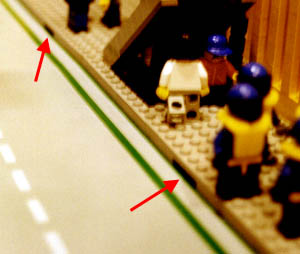
Adding sidewalks adds to the realism of an urbanized city. Sean built them 8-studs wide, on the road plates. That way he didn't have a patchwork ground of green, grey, tan, and blue, due to the varied colors of LEGO base plates, and everything flowed nicely. By adding raised sidewalks to buildings that are recessed from the road, they blend in seamlessly. Sidewalks are 2/3 of a brick high (and every now and then there will be a sewer opening).
Underground
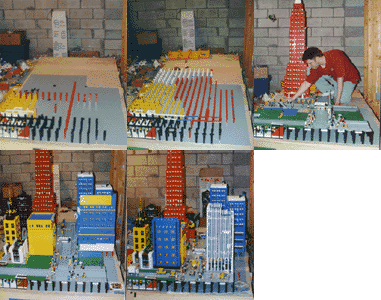 Sean raised the city up about 6 inches on 2x2-stud pillars. The animation to the right
shows how he did it... adding the pillars, putting the baseplates down, and finally adding
back all the buildings.
Sean raised the city up about 6 inches on 2x2-stud pillars. The animation to the right
shows how he did it... adding the pillars, putting the baseplates down, and finally adding
back all the buildings.
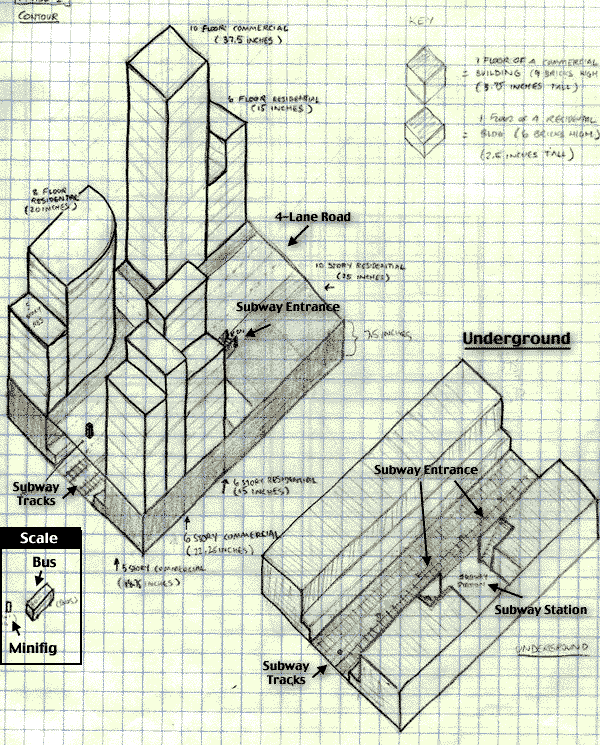
Then Sean added a subway system, basements, sunken plazas, lakes, and all sorts of goodies. Take a look at this sketch. This was a drawing he did early in 1998 when he first came up with the idea. You can also see the 4-lane roadways he was planning too.
Building height
In residential buildings, Sean usually made each floor 6 or 7 bricks high, as Lego
usually does in their models. This works well for the scale of the figures, as
well as being proportional to the doors and windows. For commercial buildings,
however, he made the lower floors about 12 bricks high, because real-life commercial
cielings are twice the height of residential buildings.
Here is an example. 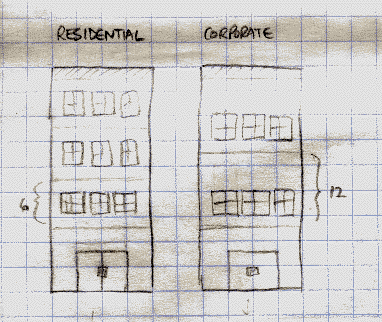
The upper floors are smaller, to allow for more floors.
Sean did vary things, just so all the buildings wont have parallel floors. Most floors were usually taller, just becuase it's easier to reach into them that way.
Adding floors to buildings
Sean invented his own means of putting cielings and floors into the larger buildings.
Rather than use regular plates linked together across the building, he bought
baseplates and cut them with an exacto knife to fit the shape of each floor. He did
this for 4 reasons:
- It's sturdier than using lots of smaller pieces. He didn't have to worry about using cross beams or pillars or anything like that to hold up the cieling.
- It looks a lot nicer to have one clean, finished piece for a floor, opposed to using a lot of loosly linked smaller pieces. (Especially from below!) And doesnt grey just look cool anyway?
- It's cheaper. HE made many floors for a relatively large building out of just one $10 extra-large grey baseplate.
- And lastly, since the baseplates don't have studs on their bottom side, he could slide floors in and out to work on them, show them to people, or photograph them.
Real electric lights
Once Sean had raised the city, he began adding little lightbulbs all over the
place -- in streetlights, buildings, etc. He made a few designs showing how to
decorate the light bulbs with LEGO elements.
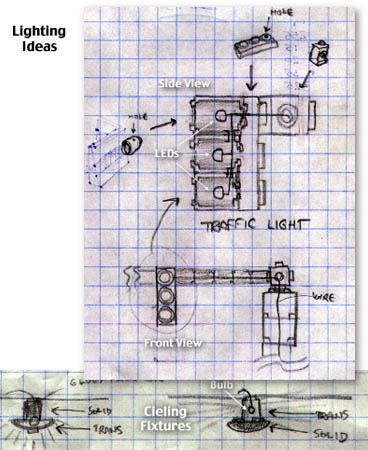
About 5 of Sean's buildings had lighting in them. All the buildings were connected to a central underground power station, by running wires under the srteets. This allowed Sean to flip one switch to turn on the whole city!
Ideas
Here's a list of improvments or creations Sean wanted to make to the city,
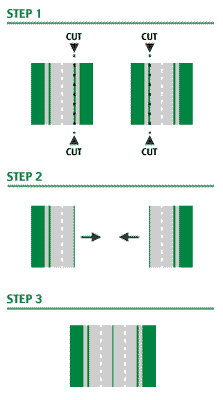
but just never seemed to get around to.- A 4-lane roadway. Sean experimented by
cutting 2 straight road plates down the middle and placing them next to
each other. Here is a picture showing how . It looks
really cool, but it is hard to do becuase you have to be very accurate with your
cutting. He wanted to make the main road in the city 4 lanes like this.
- Going with the roadplate cutting thing, Sean came up with the idea of having
a raised interstate running through a corner of the town. He could cut off the
studs on each side of the road, and then just connect a small wall. The whole
thing could then be raised on pillars. He also liked the idea of a cloverleaf,
and even drew one in one of his layout ideas .
- Sean wanted to create a clean-cut looking skyscraper using translucent blue
panels for windows. They would wrap around the entire building, side-by-side.
Unfortunately, at the time there was no way to aquire hundreds of them without spending
a fortune! (Like, buying 20 train sets..)
- Sean wanted to create an old-fashioned firehouse. The kind that are very
narrow, and 3 or 4 floors high.
- He wanted to make a giant park, with giant trees, a lake, a playground,
benches, walkways, the works! He aquired a few hundred leaf-plate LEGO pieces in an auction, and
experimented with ways of getting them to work together to make big trees yet still
remain stable. It isnt easy!
- Most of Sean's buildings are still hollow. He slowly would get
around to putting in floors and adding "life" to them. He wanted to
eventually have every room of every floor of every building have its own
little story.

Inspiration
Sean gets inspiration looking at real life. The entire city was inspired by
Manhattan, the most densly populated section of New York City.
(Hence the name of the city, "The Brick Apple". -- For those of you unfamilliar with
New York, "The Brick Apple" is named after "The Big Apple", which is New York City's
unofficial nickname.) So what about Manhattan can be seen in the city? The straight, gridded streets of midtown. Tall buildings that butt directly up against each other. One-way streets. The classic NYC-style subway entrances. Hot dog vendors! Lots of taxicabs. Sean even begun adding popular NYC landmarks, such as the Empire State Building and World Trade Center. He eventually wanted to add the Citicorp building and Grand Central Station. Maybe even the Brooklyn Bridge.
Where Sean built the city
Sean had an 11-foot by 15-foot area in the basement of his New Jersey home, reserved for
building. (Here is a a photo of the room .) In the photo
you can see all of his sorting bins out on the floor... They're usually stowed away, but
he was reorganizing them the day he took the picture.
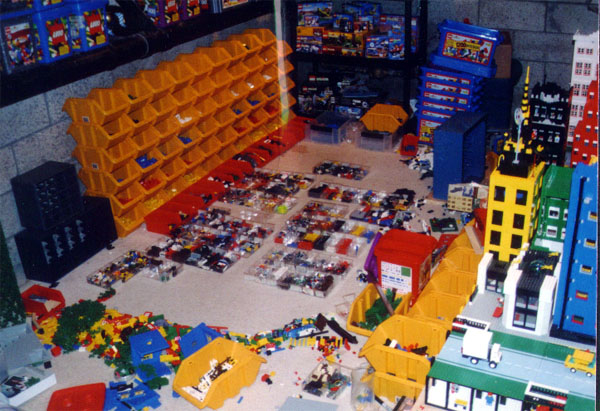
Sean had purchased lots of bulk-buckets, so he stored them all atop a pipe that ran along the wall about 3 feet up. The buckets pretty much reach the cieling.
Underneath the pipe he stored all my sorting-bins. He kept all the "regular" square bricks in big bins, and all the little special pieces in divided-drawer units ... the kind you get at hardware stores for sorting nuts & bolts.
On the floor next to the city, Sean had a large flat piece of smooth plywood that he used as a 'construction area' ... it's a lot easier to build on a hard surface. (That's all you need... to be working on the 7th floor of a building when all of a sudden the 1st floor buckles under!)