

Process
I live in Amsterdam, the Netherlands, and prior to that lived in New York City. I ride my bike every day to get around town; I don’t have a car and I advocate for reducing traffic and making the streets safer and more enjoyable for everyone.
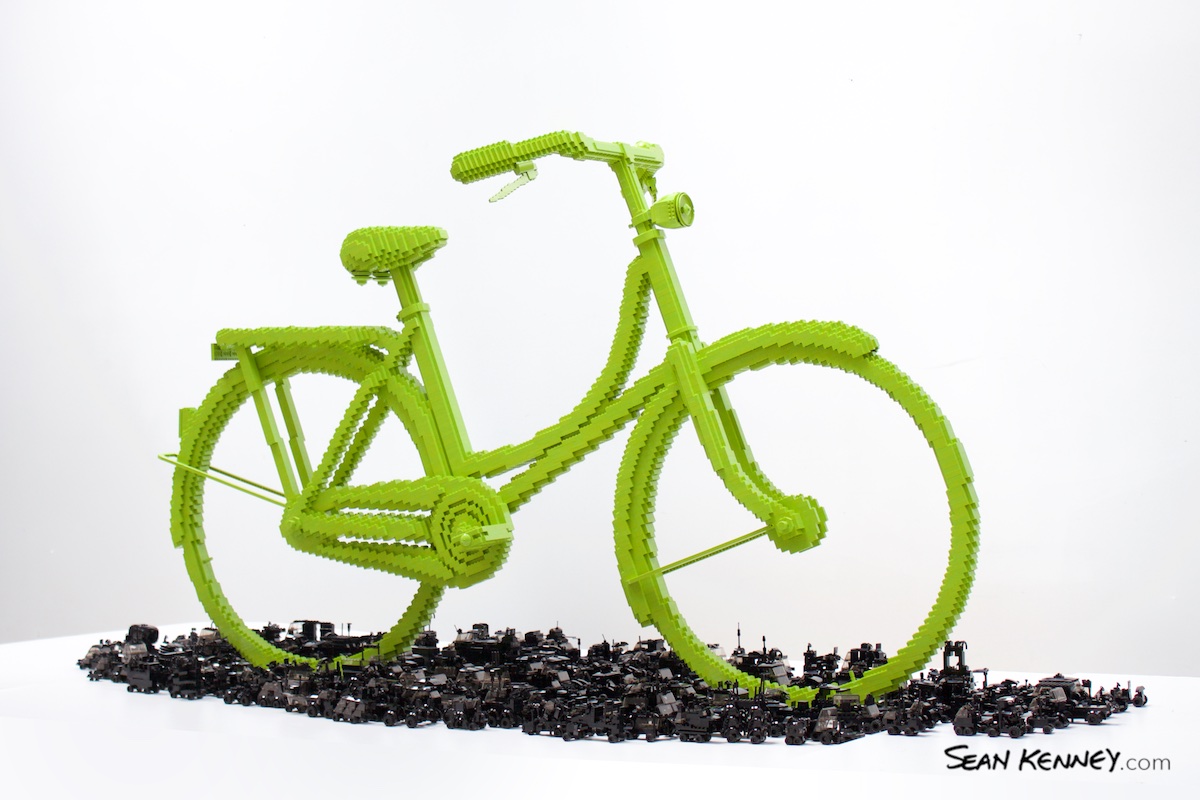
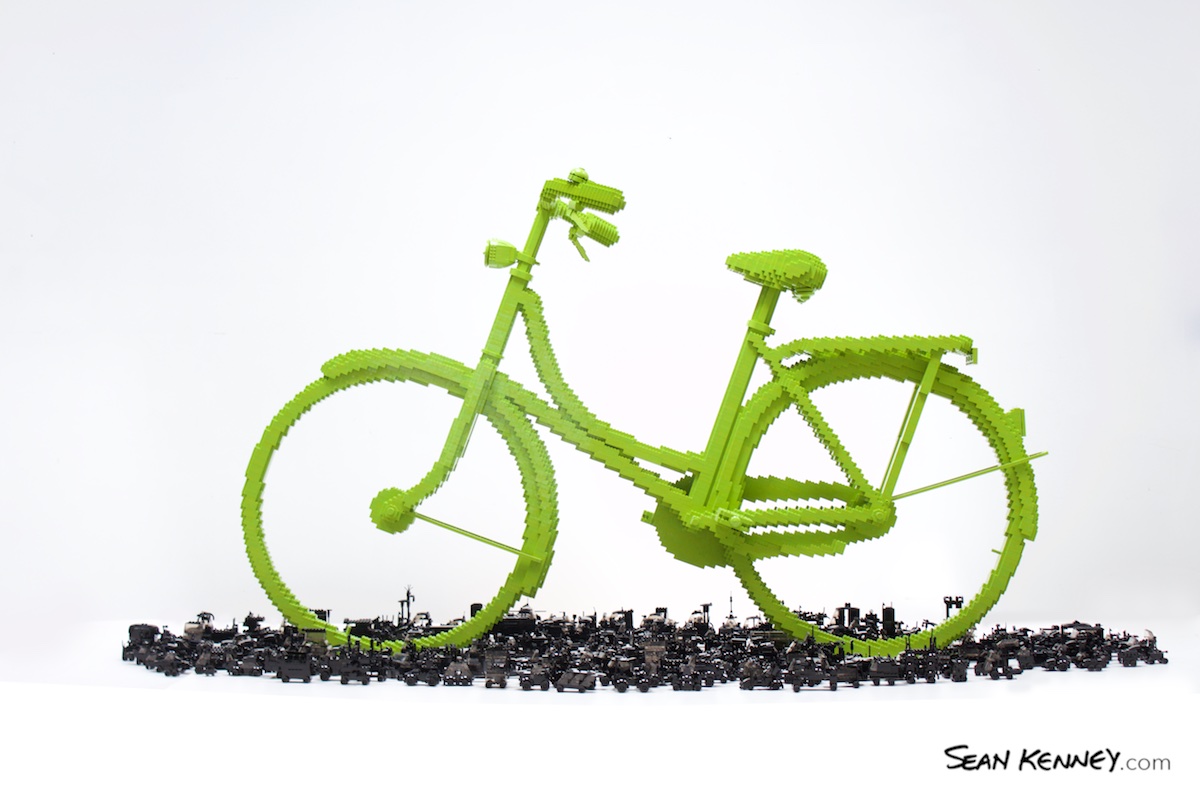
One morning as I was riding my bike from my home in Midtown Manhattan to my LEGO studio, I noticed that all the cars on the road were completely clogged in traffic in both directions, as far as I could see, traffic was completely stopped. As I quietly, smoothly zipped past everyone in the bike lane, I realized, “I love riding my bike, because it doesn’t get stuck in traffic!” and I immediately had the vision for this sculpture: A life-size bicycle, towering over a clogged up crazy traffic jam built by kids.
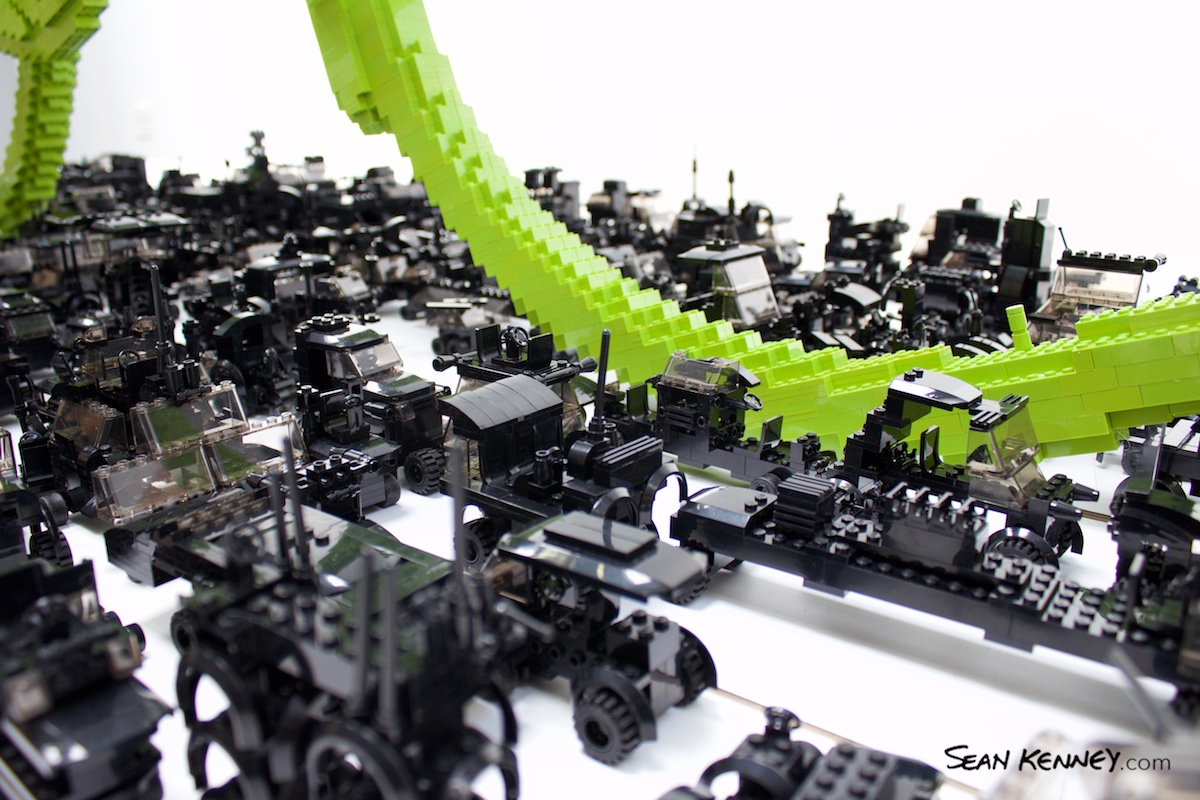
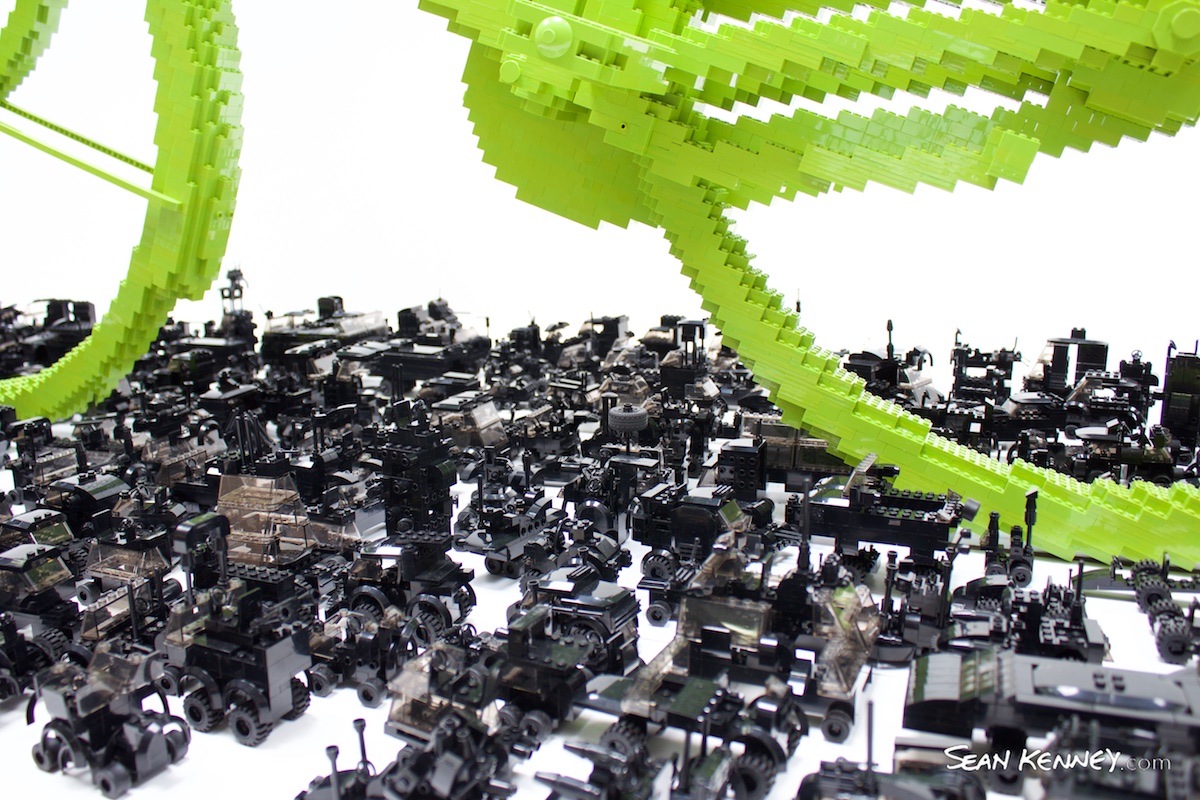
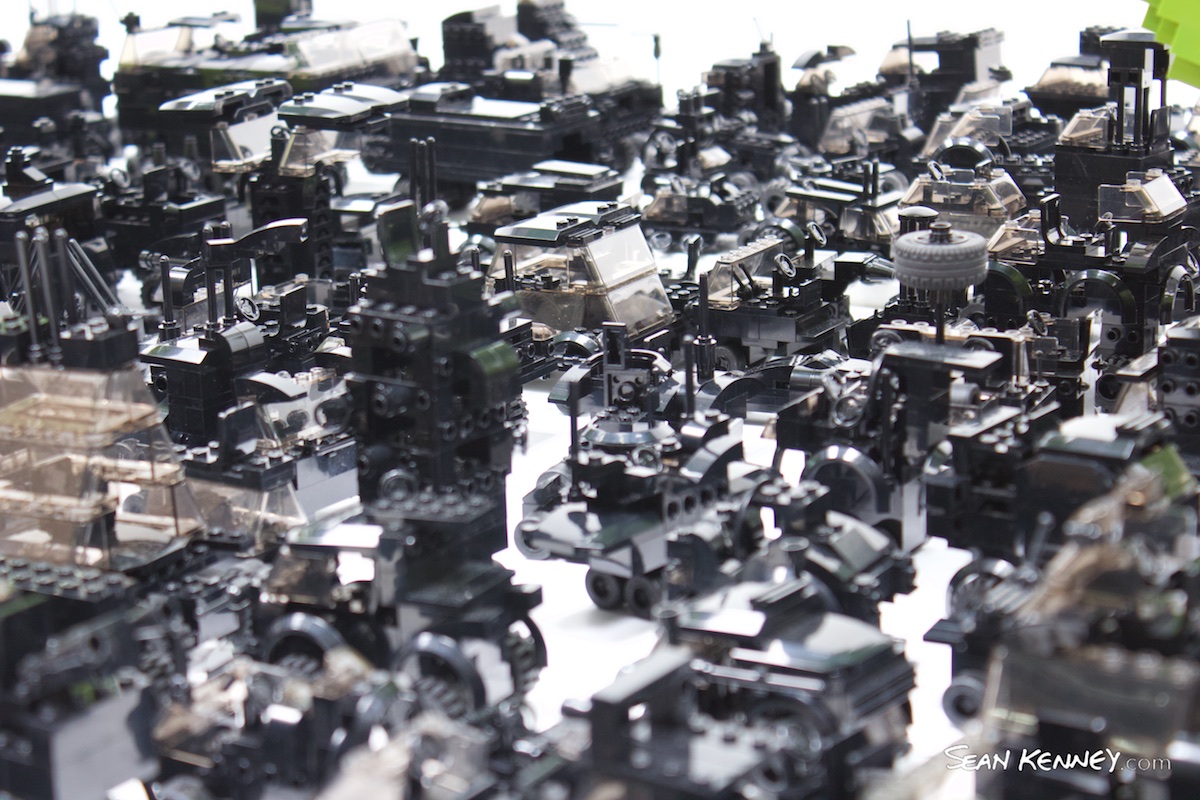
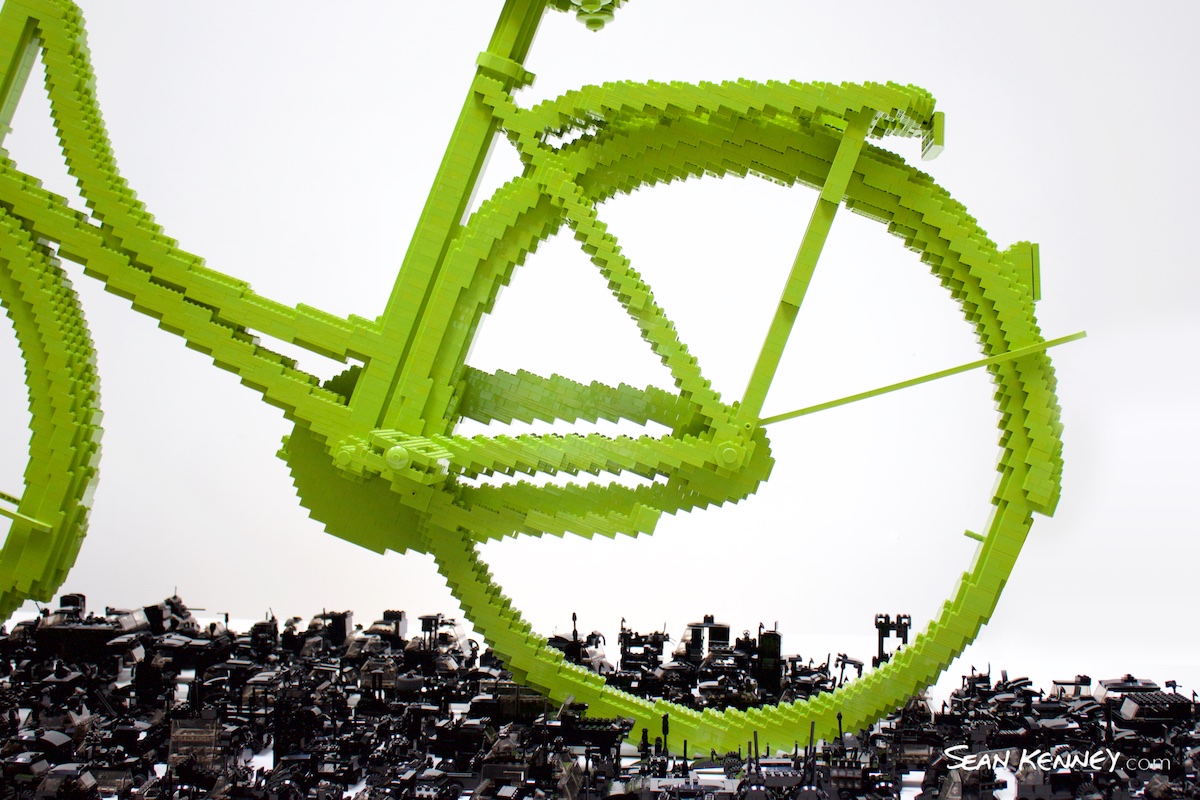
Over the course of three days, thousands of kids built the world’s biggest, gnarliest, clogged-up, crazy traffic jam at a public event in Raleigh, NC. I decided to model the bicycle after a classic Dutch omafiets (“grandma bike”), a quintessential icon of urban cycling.


After the event, I transported the children’s cars back to my studio, permanently glued them, and rebuilt the bike with a steel frame for sustained durability and transport.
The traffic jam, built entirely with black LEGO pieces, represents smog and our carbon footprint. The bicycle is eco-green, bright, and giant, symbolizing cycling as a the healthy, Earth-friendly alternative to motorized transportation.
I love that this sculpture not only looks elegant, and not only has a great message behind it, but also that it features the inspiration and creativity of thousands of children.
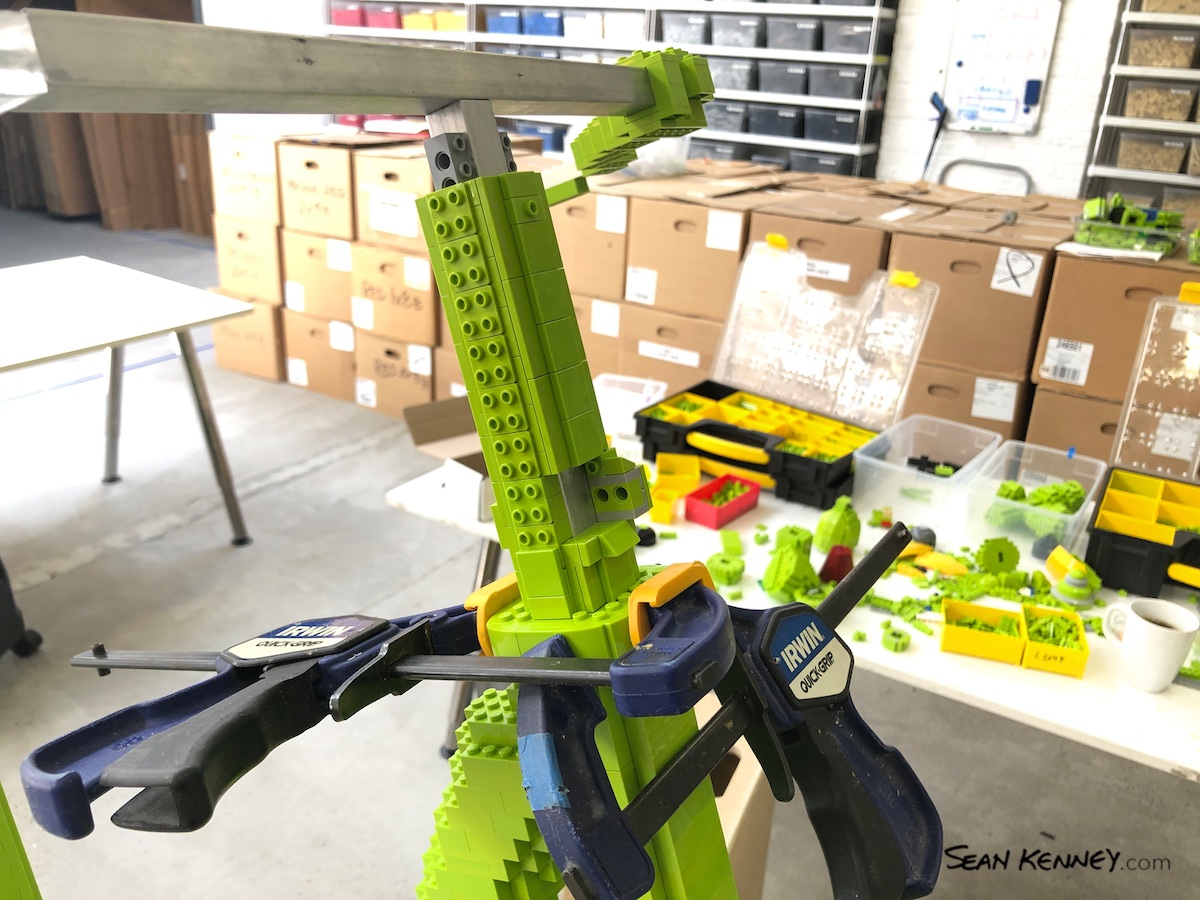
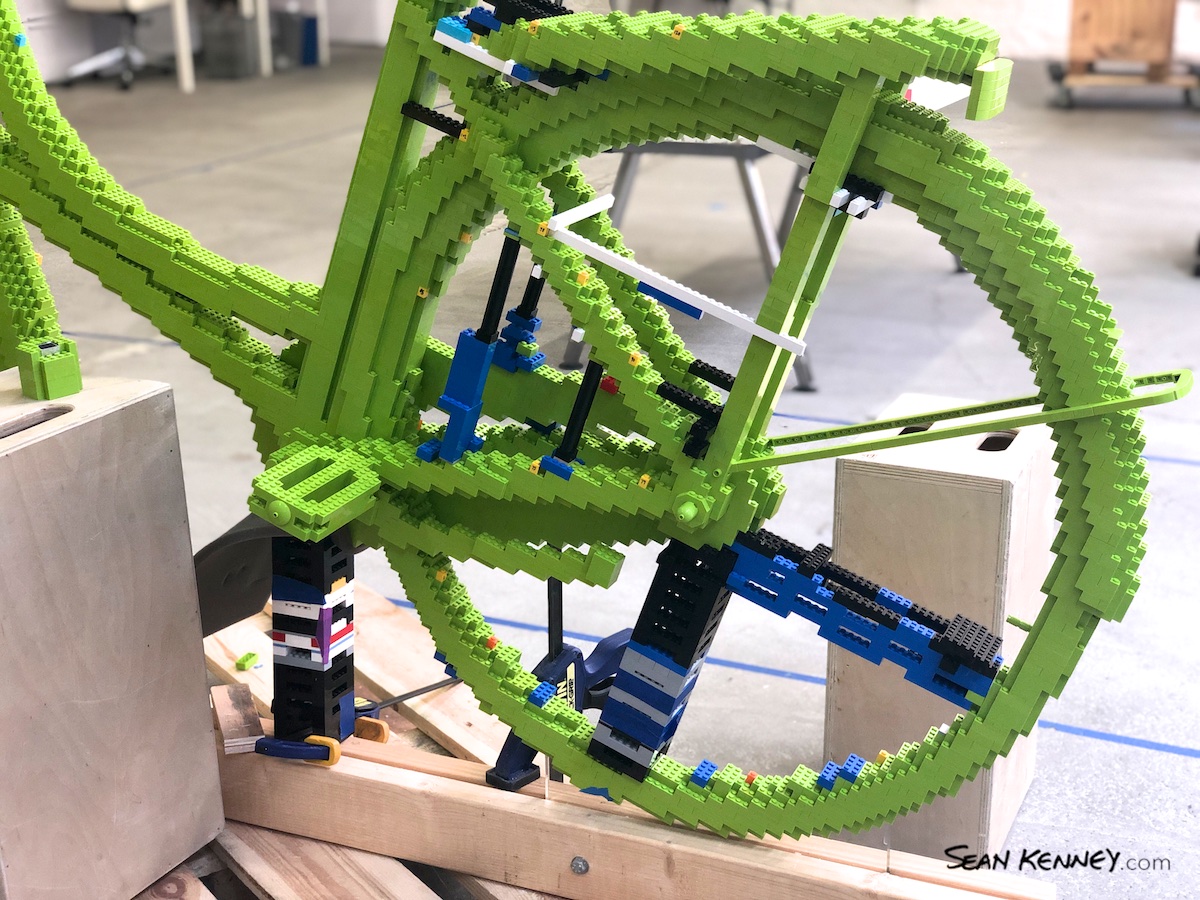
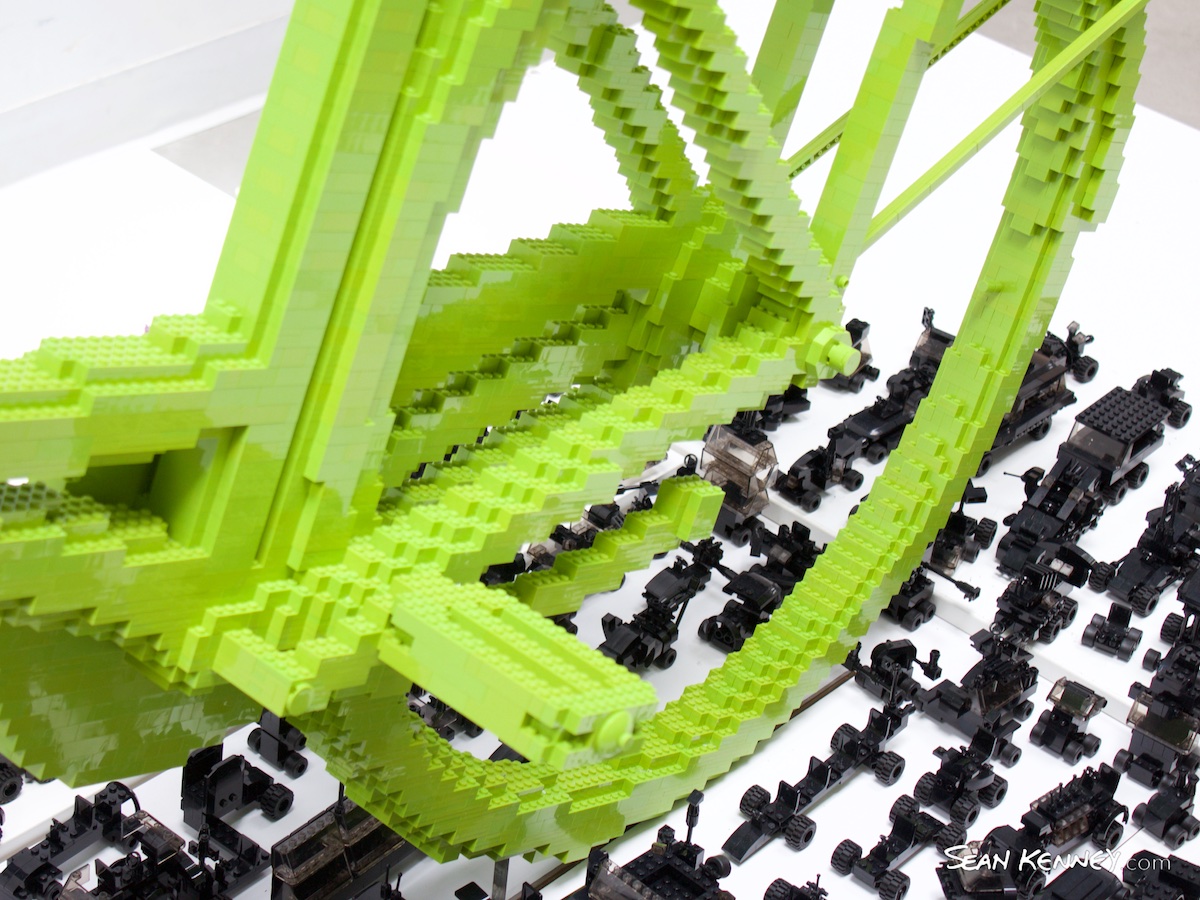
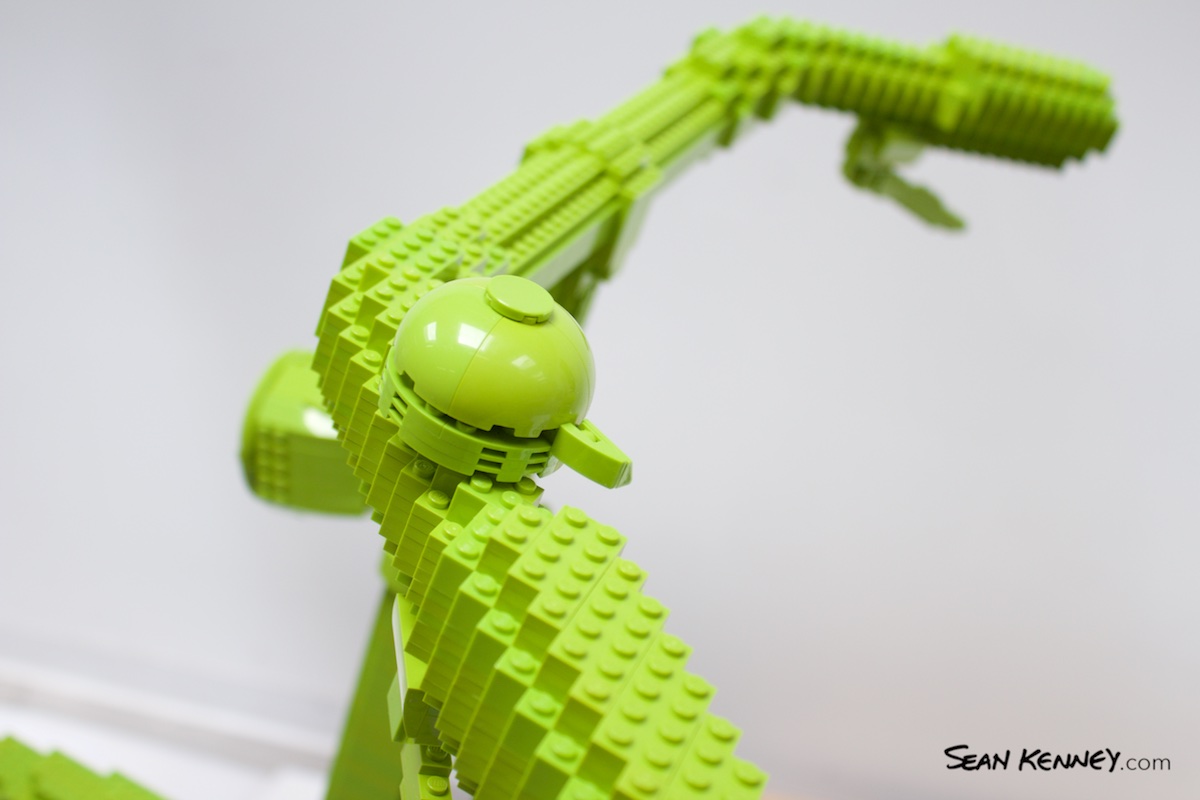
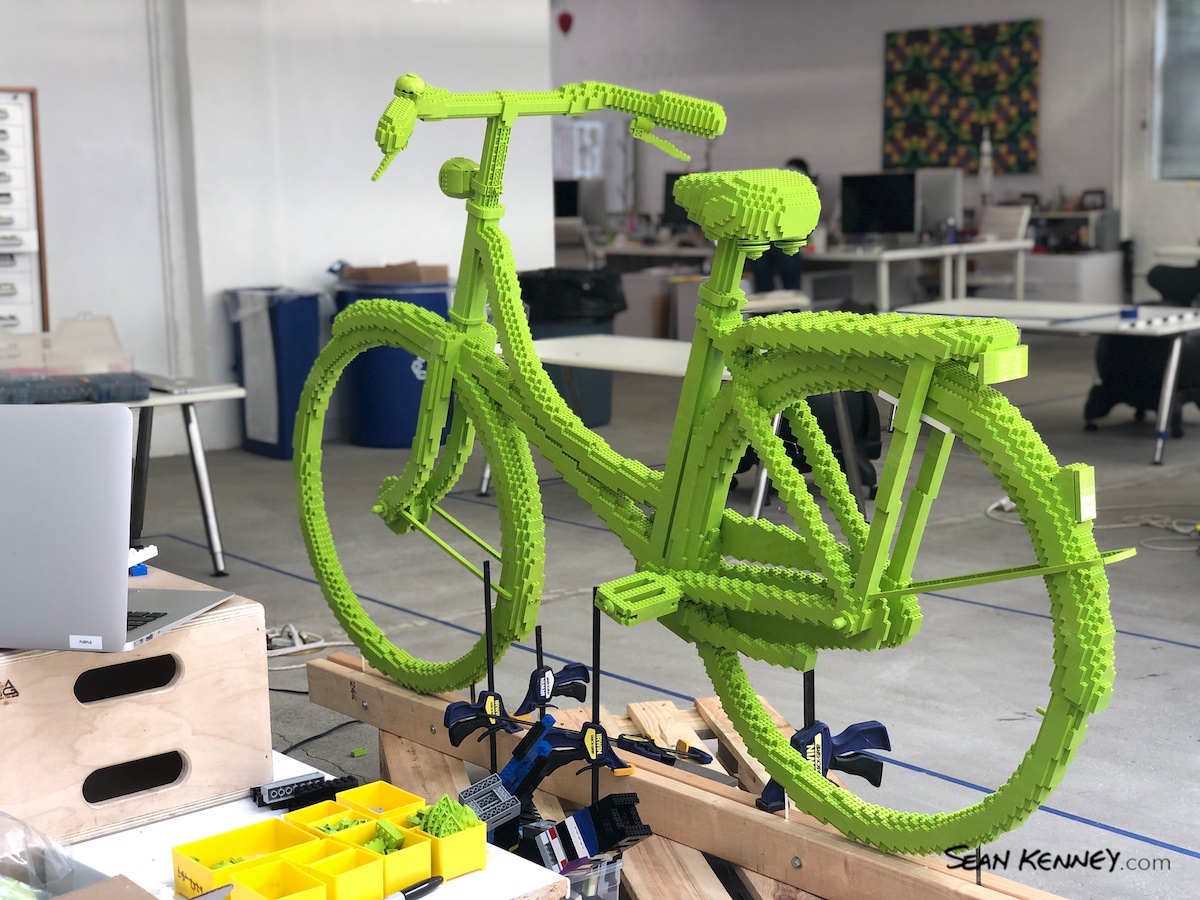
The entire sculpture is built on a slanted angle (see above) so that stacks of LEGO bricks better align with the lines of the bicycle. A laser-cut internal frame composed of acrylic and aluminum runs through the entire sculpture giving it rigidity.
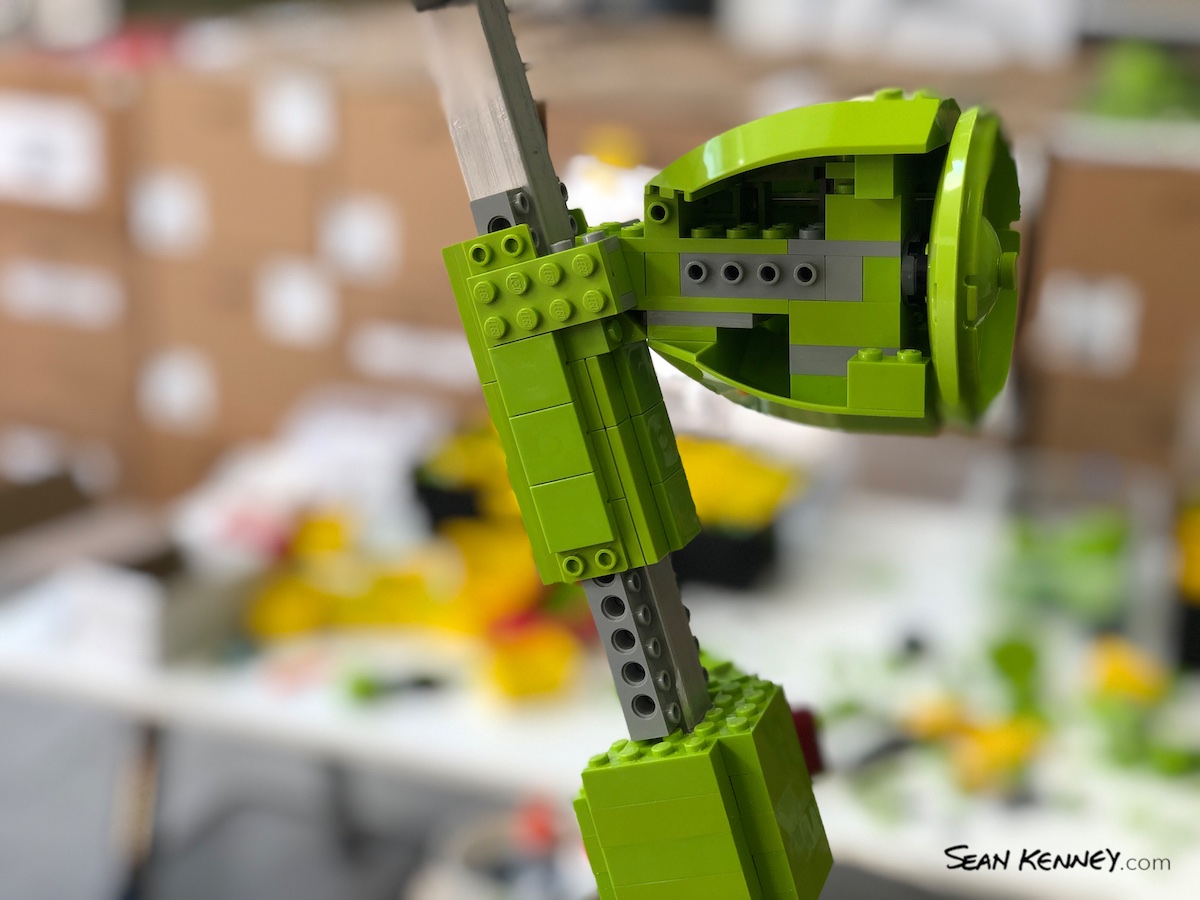
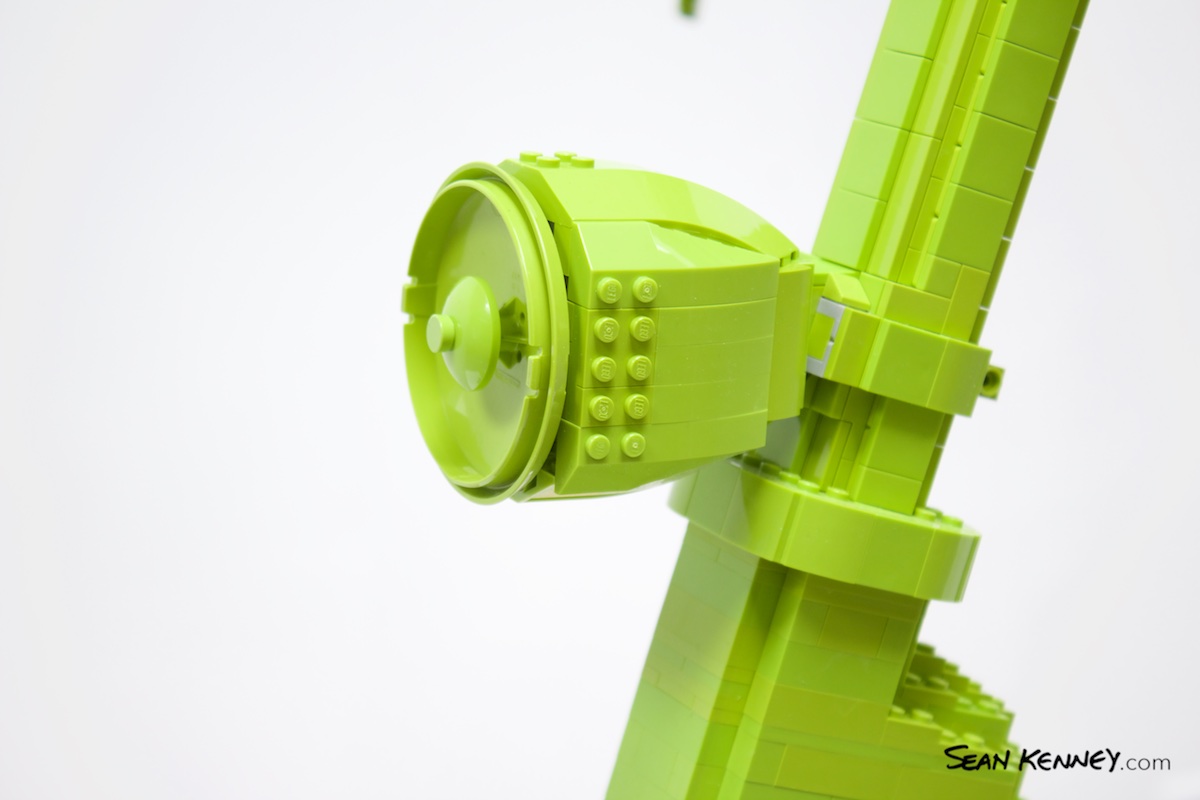
I believe in working within the rules of the LEGO system. It’s important to me that everything I create is actually buildable with LEGO bricks in the way they were designed to be used. I do not “cheat” parts into place by just gluing them in place or screwing them to an internal structure. Of course, I still need to glue every piece together, use clamps and grips, and run metal through the sculptures so that they can survive truck transport and public display. But I want the end result of every sculpture to be something true to the LEGO medium, and done in a way that you might never know what was hiding inside.
The wheels of the bicycle are intentionally free of spokes, to make it look like the wheels are spinning.